

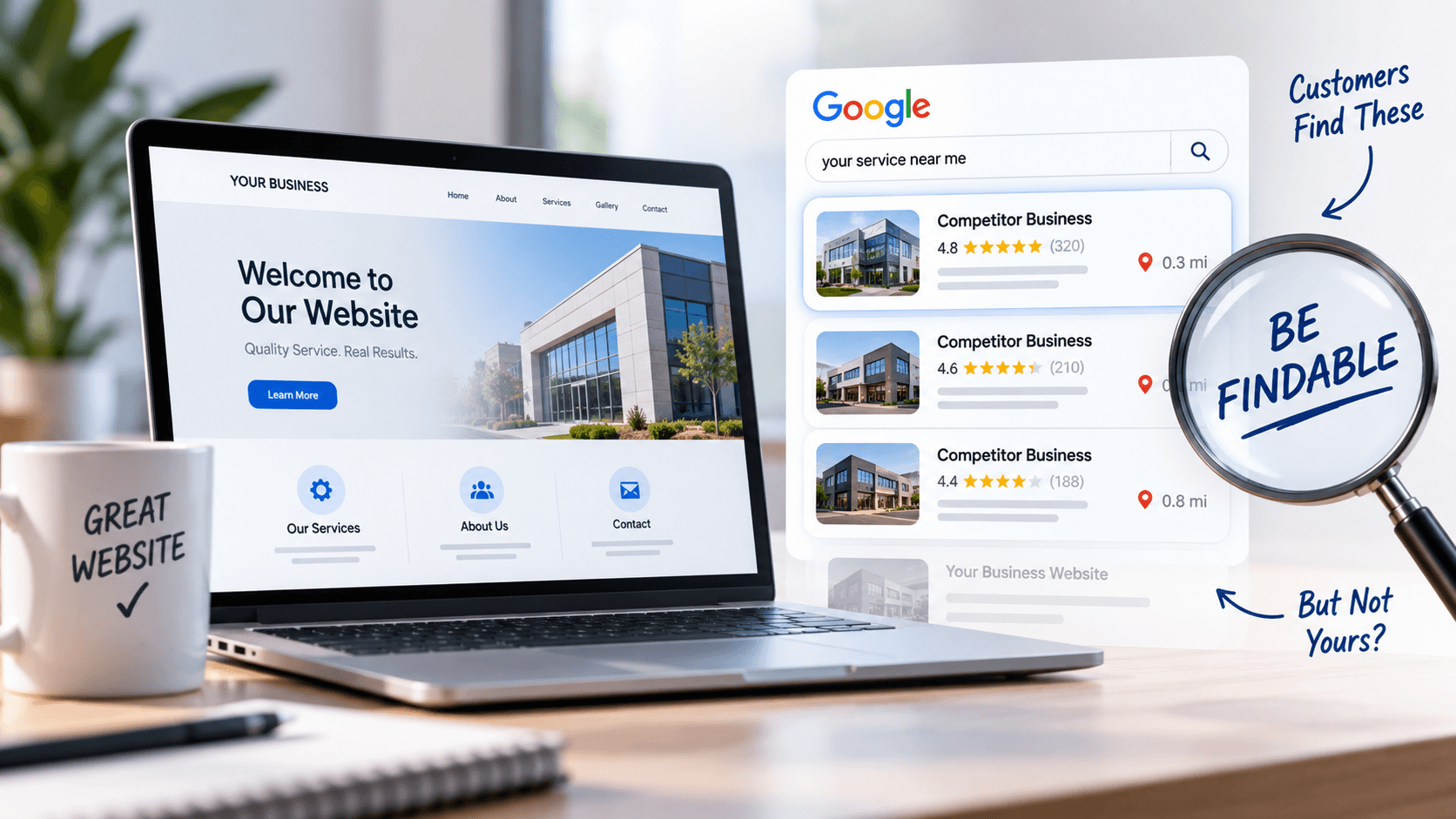
Three months and a few thousand dollars went into a beautiful new website for a specialty bike shop, and foot traffic didn’t budge afterward. The website looked great. It just wasn’t the thing customers were actually using to decide where to shop. A website is a destination. It isn’t automatically the map that gets someone there.
A Website Answers Questions Nobody Asked Yet
Most websites are built to serve people who already know a business exists, someone who clicked a link, remembered the name, or scanned a QR code. That’s useful, but it’s a different job from being discovered by someone who’s never heard of you and is searching broadly, like “bike shop near me.” A website is owned property you control completely. Discovery, the process of a stranger finding you in the first place, mostly happens somewhere else.
Discovery Happens Somewhere Else First
Before most people ever click through to a website, they’ve already looked at a Google Business Profile, a handful of reviews, maybe a map result, or a directory listing. A lot of decisions get made right there, hours, distance, star rating, without a website ever entering the picture. This matters a lot for independent businesses, since ranking a website competitively can take significant ongoing effort. A directory like Small Biz Find gives a small business another place to be found by category and location without needing to win at website SEO alone.
The Website Still Matters, Just Not Alone
None of this means a website is pointless. It’s still where people go for deeper information, an online store, a full menu, or your story in your own words. The mistake is treating it as the only front door. Your Google Business Profile, your review presence, and relevant directory listings function as additional front doors that often see more first-time traffic than the website itself, especially for a business that hasn’t invested heavily in ongoing website SEO.
Conclusion
Being findable means showing up in the several places people actually look before they ever type your web address into a browser. A website is one piece of that picture, not the whole thing. Rounding it out with a complete Google Business Profile and a listing somewhere like Small Biz Find gives customers more than one way to discover you, which matters more than any single website ever will on its own.